

Press Release
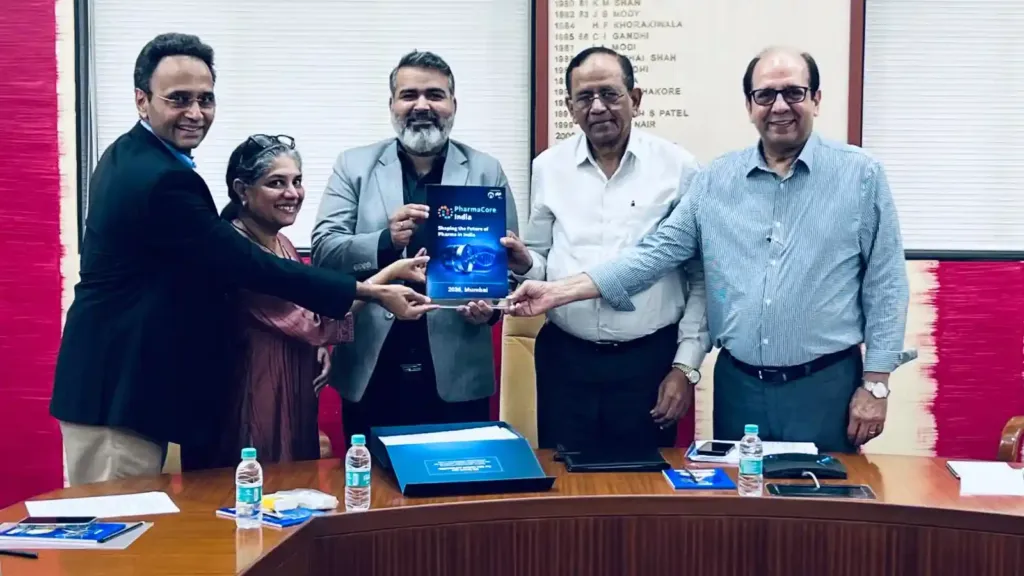
PharmaCore India 2026: Advancing the manufacture of KSMs, APIs,Formulations, and Excipients for Resilient Industry Growth.
MUMBAI, INDIA: Messe Muenchen India, in collaboration with the Indian Drug Manufacturers’
Association (IDMA), has announced PharmaCore India 2026, a dedicated trade fair focused on further
strengthening India’s pharmaceutical sector. Scheduled to be held from 22-24 April 2026 at Jio
Convention Centre in Mumbai, the event will serve as West India’s only strategic marketplace for critical
pharmaceutical segments — APIs, formulations, chemicals, and excipients.
PharmaCore India 2026: Advancing the manufacture of KSMs, APIs, Formulations, and Excipients for Resilient Industry Growth.
MUMBAI, INDIA: Messe Muenchen India, in collaboration with the Indian Drug Manufacturers’
Association (IDMA), has announced PharmaCore India 2026, a dedicated trade fair focused on further
strengthening India’s pharmaceutical sector. Scheduled to be held from 22-24 April 2026 at Jio
Convention Centre in Mumbai, the event will serve as West India’s only strategic marketplace for critical
pharmaceutical segments — APIs, formulations, chemicals, and excipients.
analytica Lab India & PharmaCore India 2026: A Convergence of Science, Scale, and Supply Chains
Mumbai edition advances India’s laboratory and pharmaceutical ecosystem through a unified industry platform
Key Highlights:
- Over 228 exhibitors displayed 100+ new technologies
- 6,998 & 3,080 business visitors attended analytica Lab India and PharmaCore India, respectively
- 120+ hosted buyers from India and around the world enabled structured sourcing conversations
Mumbai, 24-April: In a landscape where precision, compliance, and speed define industrial competitiveness, laboratories and pharmaceutical manufacturing are no longer parallel functions—they are interconnected engines of growth. This convergence was brought into sharp focus at the Jio World Convention Centre, Mumbai, where analytica Lab India 2026 co-located with the inaugural PharmaCore India 2026, held from 22–24 April 2026 at Jio World Convention Centre, Mumbai.
Built on the premise of enabling end-to-end industry visibility, the 2026 edition marked a strategic expansion—from laboratory science to the broader pharmaceutical production ecosystem. The result was a platform designed not just for showcasing technologies, but for enabling informed, high-value business decisions.
The inaugural ceremony on the opening morning set a measured but clear tone for the event’s intent. The presence of Dilip Shanghvi – Founder & Executive Chairman, Sun Pharmaceutical Industries, Bhupinder Singh – President IMEA (India, Middle East, Africa) and CEO, Messe Muenchen India and, Bharat Shah – President, IDMA (Indian Drug Manufacturers Association), and Deepak Parab – Vice President, (Indian Analytical Instruments Association) reflected the level of alignment between laboratory science and pharmaceutical manufacturing. Rather than a ceremonial formality, the inauguration functioned as an early signal of the industry’s shift toward more integrated, decision-focused platforms.
Drawing participation from across India and international markets, the exhibition brought together stakeholders from pharmaceuticals, biotechnology, diagnostics, food testing, and environmental monitoring, alongside manufacturers and suppliers across the pharma production chain. analytica Lab India and PharmaCore India recorded strong industry participation, welcoming 6,998 and 3,080 business visitors, respectively.
With 228 exhibitors spread across 15,000 sqm, the show delivered both scale and specialization— ensuring relevance for technical experts as well as business decision-makers.
The co-location of analytica Lab India and PharmaCore India brought together complementary segments of the industry within a single venue. While analytica Lab India 2026 covered analytical instrumentation, laboratory infrastructure, consumables, and automation-driven digital solutions, the inaugural PharmaCore India focused on APIs, intermediates, excipients, formulation inputs, and CDMO services. This combined layout enabled visitors to engage with suppliers across both laboratory and pharmaceutical manufacturing domains in one setting, reflecting the growing overlap in sourcing and technology evaluation across these sectors.
For Messe Muenchen India and Indian Drugs Manufacturers’ Association (IDMA), the introduction of PharmaCore India reflects a calibrated response to how the market in West India is evolving. With a dense concentration of pharmaceutical manufacturing in the region but limited dedicated sourcing forums of this nature, the co-location signals a move toward more consolidated industry platforms.
The co-location of analytica Lab India and PharmaCore India brought together complementary segments of the industry within a single venue. While analytica Lab India 2026 covered analytical instrumentation, laboratory infrastructure, consumables, and automation-driven digital solutions, the inaugural PharmaCore India focused on APIs, intermediates, excipients, formulation inputs, and CDMO services. This combined layout enabled visitors to engage with suppliers across both laboratory and pharmaceutical manufacturing domains in one setting, reflecting the growing overlap in sourcing and technology evaluation across these sectors.
For Messe Muenchen India and Indian Drugs Manufacturers’ Association (IDMA), the introduction of PharmaCore India reflects a calibrated response to how the market in West India is evolving. With a dense concentration of pharmaceutical manufacturing in the region but limited dedicated sourcing forums of this nature, the co-location signals a move toward more consolidated industry platforms.
Speaking on the sidelines of the event, Bhupinder Singh, President IMEA (India, Middle East, Africa) and CEO, Messe Muenchen India, said, “The intent was to align the trade fair format more closely with real-world industry linkages. “Laboratory science and pharmaceutical manufacturing are closely connected in practice. Bringing them onto a common platform allows for more relevant conversations between solution providers and end users,” he noted.
Industry bodies also pointed to the need for such convergence. Bharat Shah, President, IDMA (Indian Drug Manufacturers Association), observed that platforms that bring multiple parts of the pharmaceutical value chain together can help streamline vendor discovery and evaluation. “For manufacturers, access to verified suppliers across inputs and services in one place improves decision- making timelines and supports better planning,” he said.
From the analytical science perspective, Ravindranath Cherukuri, President, Indian Analytical Instruments Association, highlighted the increasing alignment between laboratory capability and manufacturing outcomes. “As regulatory expectations evolve, the role of analytical infrastructure becomes more central. Engagement between laboratories and manufacturers is therefore becoming more continuous, not episodic,” he said.
The hosted buyer program, which brought in over 120 pre-qualified buyers including those from Uganda, Vietnam, Philippines, Colombia, Kazakhstan, Taiwan, Malaysia, Kenya, Tanzania, Ghana, and Sudan, was a key component of the event’s business orientation. Structured meetings allowed exhibitors to engage directly with decision-makers carrying defined procurement mandates, reducing the typical lag between initial contact and commercial discussion. Several participants indicated that the format enabled quicker progression from exploratory conversations to potential partnerships.
Running alongside the exhibition, the three-day conference program in collaboration with leading industry associations such as IPA, FPME, IPEC, IAIA, IDMA and CPRTTF, focused on the intersection of science, regulation, and operational scale. Day 1, under “Powering Biopharma – Scripting India’s Growth Trajectory,” addressed early-stage development of novel biologics for oncology and rare diseases, the integration of analytics from research to clinical application, and strategies for de-risking pharma exports by reducing US dependency and expanding through merchant exporters, alongside technical insights into immunogenicity, advanced bioprocessing, and continuous manufacturing .
Day 2 centred on Lab 5.0: Human-Centric Automation & Ethical AI, combining an AI masterclass with a regulatory-led panel that examined critical industry priorities including Schedule M and regulatory updates, the shift from cost efficiency to value creation, and the growing emphasis on sustainability in manufacturing and quality systems; this was complemented by dedicated sessions on excipient innovation, covering EXCiPACT certification, continuous manufacturing enabled by excipient design, process technology selection, and formulation robustness .
Day 3 expanded the conversation to global competitiveness through “From India to the World: The Future of Pharma Innovation,” featuring keynote and leadership perspectives on India’s innovation pathway, followed by “2026 Ingredient Shifts: The Nutraceutical Industry Roadmap,” which addressed supply chain risks, evolving ingredient strategies, and the future direction of the nutraceutical sector . Collectively, the program positioned the platform as a critical interface between science, compliance, and commercial scale.
Exhibitors across both shows pointed to steady, technically relevant engagement, with discussions centred on application fit, compliance requirements, and integration into existing workflows.
From the analytica Lab India segment, Padmini Satish, Demand Generation Team Leader – India Marketing, Waters I TA Instruments noted that the platform continues to attract a technically informed audience. “Most conversations were specific to use cases and system requirements. There is a clear expectation from visitors to understand how solutions fit into their current processes,” he said.
Exhibitors from the PharmaCore segment noted that engagement levels were aligned with expectations for a first edition. “The visitor profile was relevant, particularly from procurement and development roles. The focus now is on continuing these discussions beyond the show,” said Shikhar Mahajan, Associate Vice President (Business Development), Gufic Biosciences Limited .
On the buyer side, attendees pointed to the efficiency of evaluating multiple suppliers within a limited timeframe. “Having different solution providers available in one place makes initial comparisons easier—it allows for quick shortlisting before moving into deeper, more structured evaluations. It also created a very efficient and engaging environment for meaningful discussions, making the overall experience both productive and insightful,” said Pravin Kulkarni, Vice President, Light Pharma.
“PharmaCore India offered a practical way to connect with a wide cross-section of pharmaceutical suppliers and manufacturing partners in one place. It allowed us to explore new collaborations, assess capabilities firsthand, and stay aligned with evolving industry requirements,” said Manish Bhati, Senior Manager – New Product Third Party Procurement, Alkem Laboratory Limited.
analytica Lab India & PharmaCore India 2026 reinforced a clear industry direction—integration is no longer optional. By bringing together laboratory science and pharmaceutical manufacturing, the platform enabled a more complete, efficient, and commercially relevant marketplace.
Following the strong industry response, the next edition of analytica Lab India & PharmaCore India will return in 2027 from 21st to 23rd April, with expanded participation and deeper ecosystem integration— continuing to serve as a critical meeting point for decision-makers shaping the future of science and pharmaceutical production in India.